Episode 17: Strong Arm, Sharp Sword

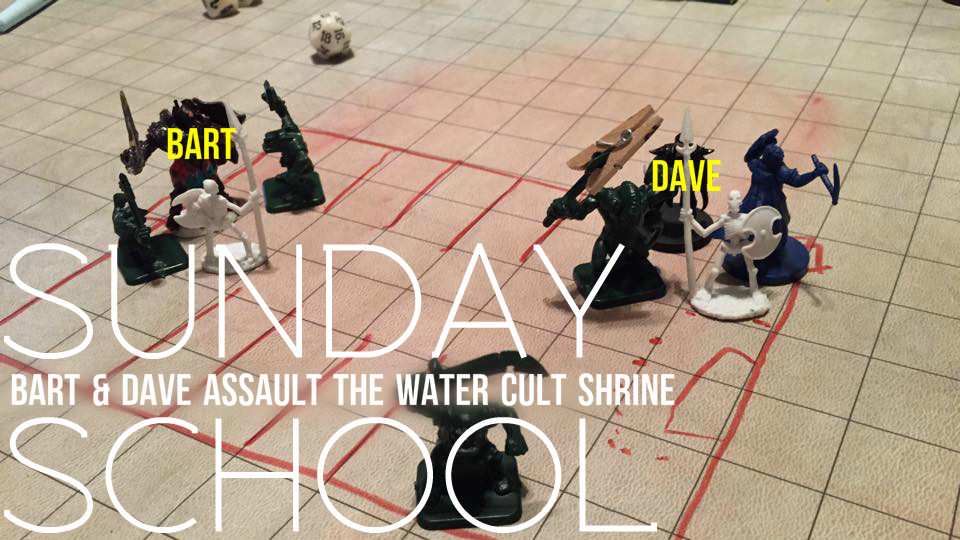
Dave & Bart assault the water cult church

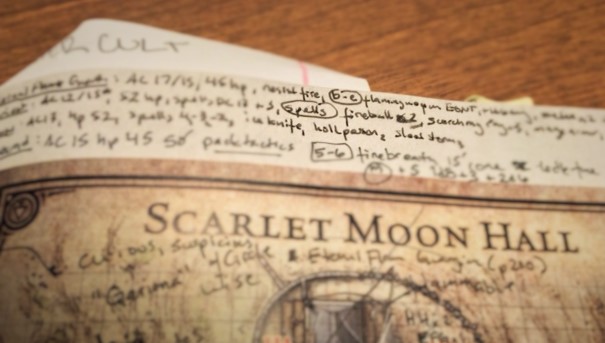
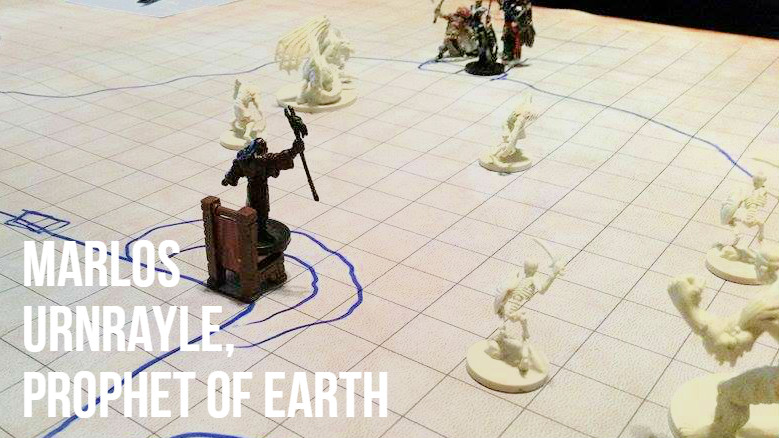
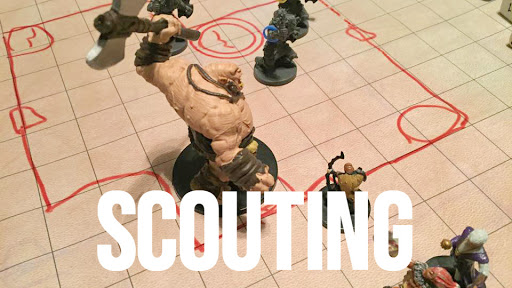
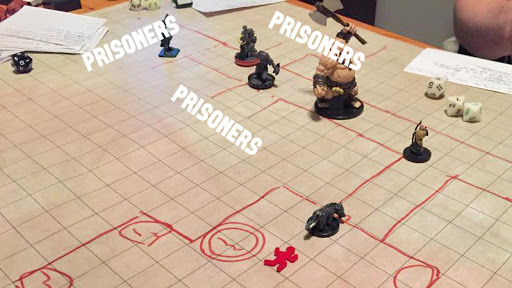
Scouting Rivergard Keep — I’m Dave; I’ve got a strong arm and a sharp sword — infiltrating the water cult — potty breaks as leet strat — stealth action game — mercenaries are great; they will work for you for money — how to kill a boss without an attack roll — the way below opens.

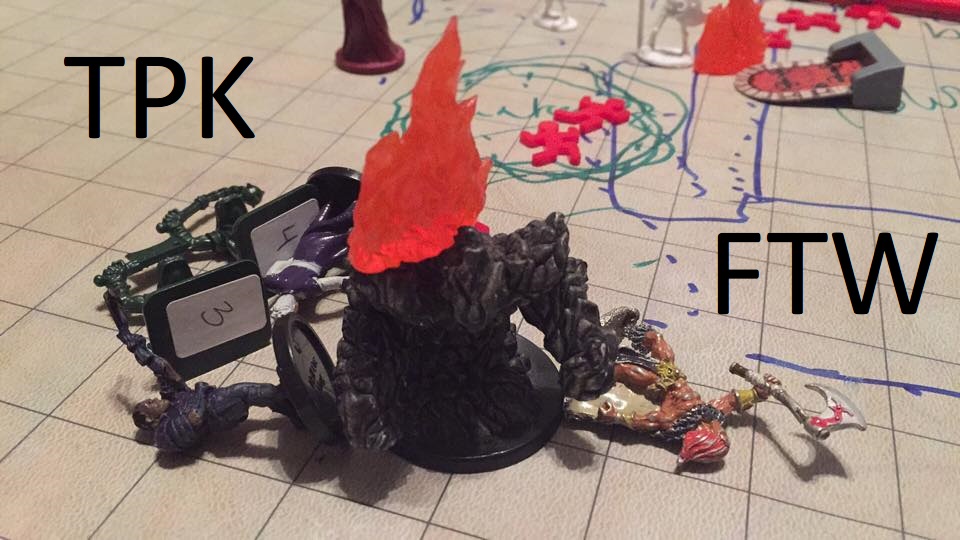
After our TPK in the last episode, we rolled in with one new toon, one old toon, and only two players—not for the campaign, just for this session.

The Adventures of Dave & Bart begins.

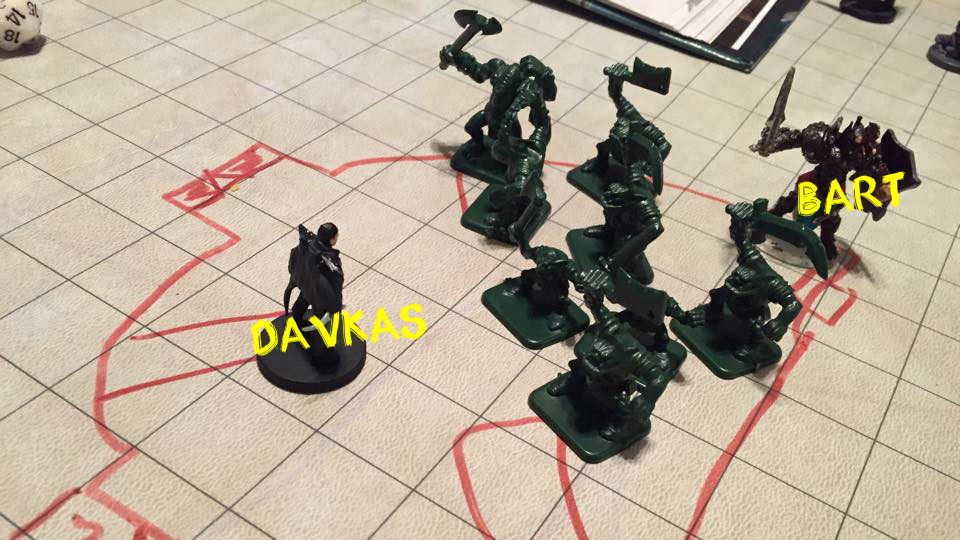
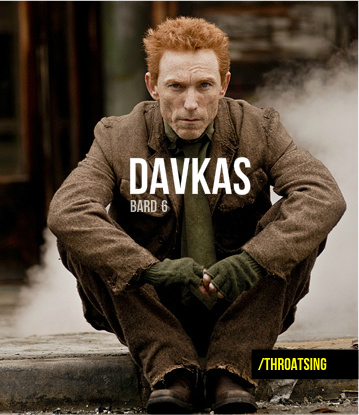
Davkas (“Dave”), Bard 6 (Jim)
Bart, Paladin 4 / Fighter 2 (Tim)

This was a very different style of play than what we’ve done before. It was mostly stealth, infiltration, and in-character roleplaying in order to blend in and bluff, mostly on the part of Jim, via his old debuff/heal bard Davkas.

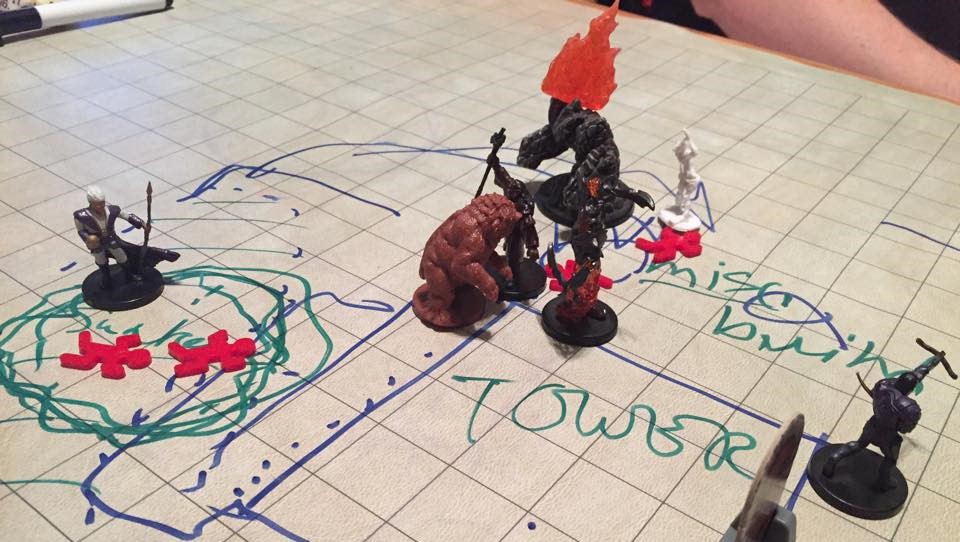
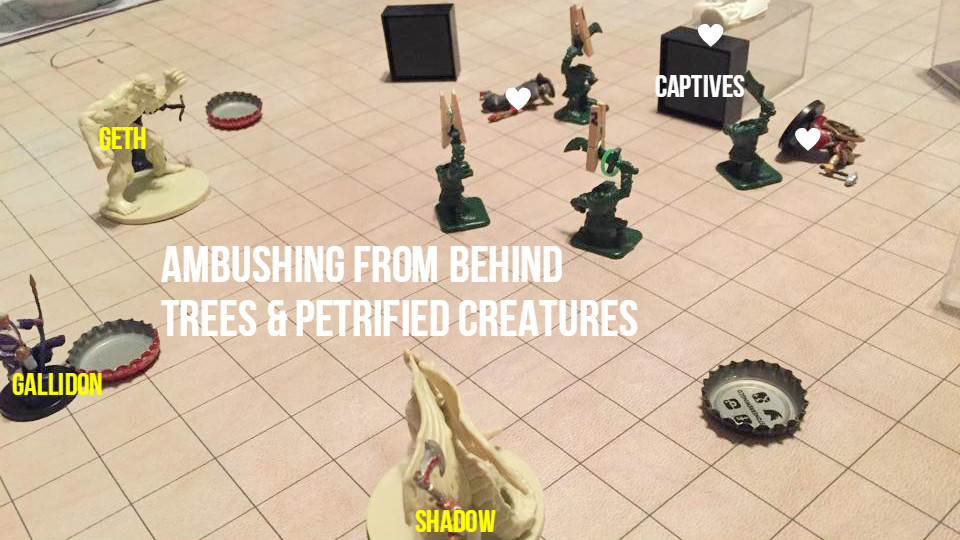
After scouting Rivergard Keep, which is the first tier water cult complex, the party went room to room, blasting mobs like the seasoned pros they are.

If you want to leave a social situation, say because you’re actually trying to infiltrate and dispatch the people you’re with, excusing yourself and saying that you have to take a dump is really a dope strat, as you will see no less than three times in this episode.

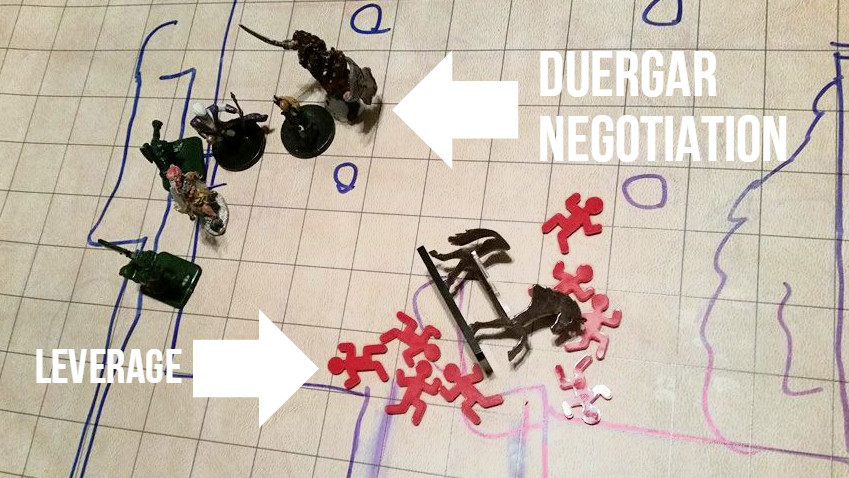
In the process, they convinced some of the mercs that the cult had hired to join up with them, which has proven so far and will prove in later episodes to be an excellent tactic and reliable laugh. 
By the end of the episode, the level is clear. Next time, we descend with a fuller party to tackle the water cult proper.

Episode 16: 80d6 Fire Damage, Save for Half

fateful annotations

Approaching the not ominously burning wicker man hippie druid festival — drug shenanigans — making the assault — 80d6 fire damage, save for half — the future.
A brutal, brutal episode.

The future direction of the show was in doubt after this one, but, fortunately, we decided to soldier on with Princes of the Apocalpyse, despite our reservations about it.

Also: if you have a wizard, get fireball at level 3.

Duh.

You can rain 16d6 of destruction on you enemies over two rounds. Who can say no to that?

As a direct result of this episode, Tim’s next character took the mage slayer feat.

That’s what I like to see.

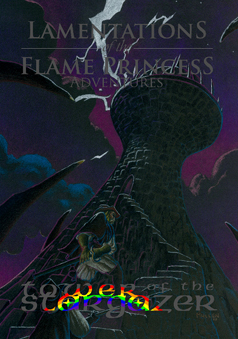
DragonCon 2015: Tower of the Stargazer (Part 1)

tower of the stargazer cover

DragonCon 2015 — we are bad at cons — post-hoc dining — LotFP character creation takes 2 seconds — blasted moonscape — always caution.
Pretty short episode here; we were just in to DragonCon, and couldn’t even be bothered to arrange a proper table.

In a break from our usual fare (well, not a huge break, as Lamentations of the Flame Princess is still basically just D&D), we booted up an early +James Raggi LotFP module: Tower of the Stargazer. Jim & Tim created a cleric and a specialist (rogue/thief) with +Ramanan S‘s generator, and we were off.

There’s not any combat in this episode—so, in another sense, its very different from our usual fare. This was all careful problem solving and navigation of imagined physical space. Plus some fun character interaction between “Spec” (awful old man specialist 1) and his Anglican deaconness daughter, Sam (level 1 cleric).

And the caution is well-advised: there were at least a couple times in this episode where it could have been save vs death time. But, because of clever play, the dice never had to come out.

DragonCon: http://dragoncon.org/
+James Raggi‘s +Lamentations of the Flame Princess (NSFW): http://www.lotfp.com/RPG/
Tower of the Stargazer: http://www.lotfp.com/store/ToweroftheStargazer
+Ramanan S‘s LotFP character generator: http://character.totalpartykill.ca/lotfp/
Reel Art (I think): http://www.reelart.biz/

Episode 15: Kill 40 Orcs

mid melee
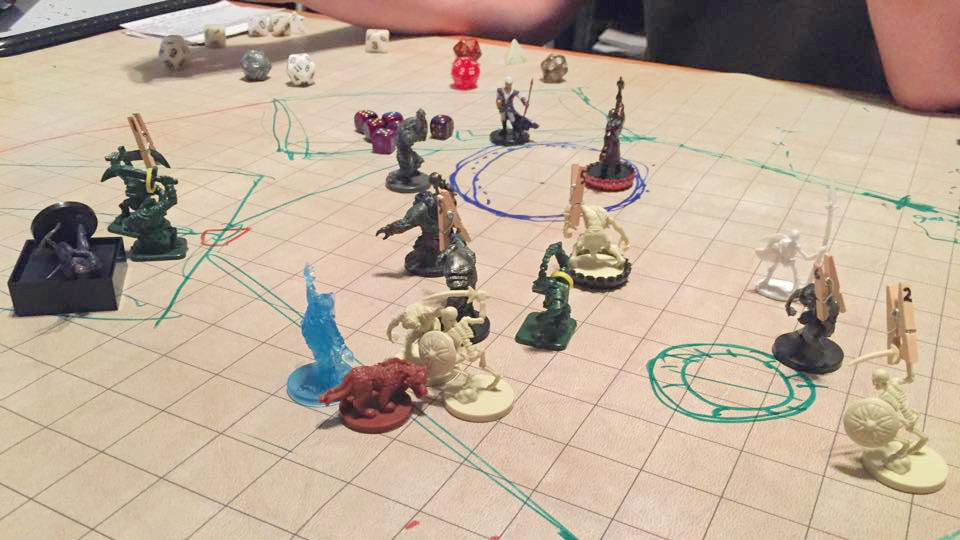
Killing 40 orcs — survivors — Emerald Enclave funereal customs — the notches mean ten.

This one is almost entirely combat, very wargamey combat. 40+ orcs disposed against our PCs on a farmstead. You will hear me count a lot.

This is the conclusion of the sidetrek “Iceshield Orcs” from Chapter 6 of Princes of the Apocalypse, in which the party heads to the northeast of the overland map to protect farmsteads from a band of orcs.
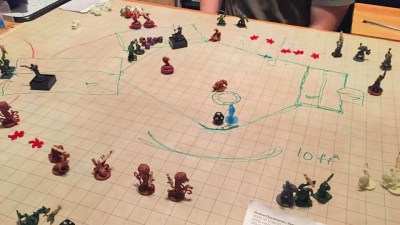
initial setup

I talk about this some in the episode, but I’ll discuss more at length here. The text essentially instructs you to make this part of the module meaningless. The orcs are supposed to toss some javelins, melee for a round, then retreat. You’re supposed to make sure the PCs feel threatened without actually threatening them.

Then dawn arrives, and the elves show up, and the day is epically saved!!!11~~~1

HISTORICALLY ACCURATE ELVEN WARHORNS

When we set up the defenders, we might not have given the full complement listed in the book, mostly because:

  1. I didn’t want to deal with it
  2. It would pollute the XP distribution

And so we treated the allies as terrain-with-morale.

Maybe I’m being too hard on it. If I handed over some NPCs to the players to control (as the module suggests), it would be more of an even fight, such that the orcs might not want to push their advantage . . .

BUT (emphasis mine):

You want to create tension and make it seem like the outcome teeters on the brink of disaster [but this is supposed to be an illusion]. Near the end of the battle [determined by what?], the elves show up as described in the “Relief Arrives” section. 

The orcs repeat this pattern several times, perhaps breaching a spot here or there before the defenders push them back. [How do we know the defenders will push them back?] Then they start trying different tactics.

“Relief Arrives”

At dawn, the orcs make a final push. It should seem like they might overwhelm the defenders [but I am supposed to make sure this doesn’t happen? how?] in several spots, and get inside the compound. Suddenly, the melodious tone of an elven war horn sounds, and a company of twenty-five elven soldiers . . . arrives to help.

(page 166)

The way this page talks, this section of the game is effectively a cutscene, maybe a QTE you can’t fail, in which case, what’s the point?

I can understand this if you’re just narrating the events, which is fine I suppose(?) if there’s not some illusion of player agency here. It’d be just like narrating an overland journey or presenting the sense of place of a new city, but that’s not what’s going on here.

IN ANY CASE…

We ran it as a straight up fight, everything on the table. I (with my admittedly limited) tactical ability played the orcs as hard as I could; and, even though moving so many units through the motions was a bit tedious, it was educational to see more clearly the roots of the hobby—and why you’d want things to die in a single hit most of the time.
Episode 14: Flagnasathar the Multisyllabic

New thing this time!

The Abridged Version

We’ve added an abridged version of the episode, which eliminates all the combat dice-rolling wargamey bits. The full and abridged versions will live in the same feed and should otherwise be identical. There’s a chirp tone to indicate that a combat has been skipped over. Starting with Episode 16, we should verbally indicate as well.

Onto the Notes

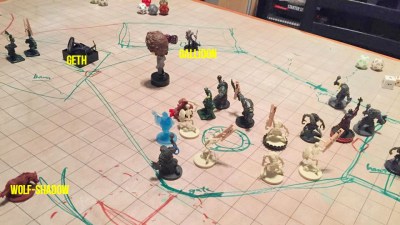
marching order

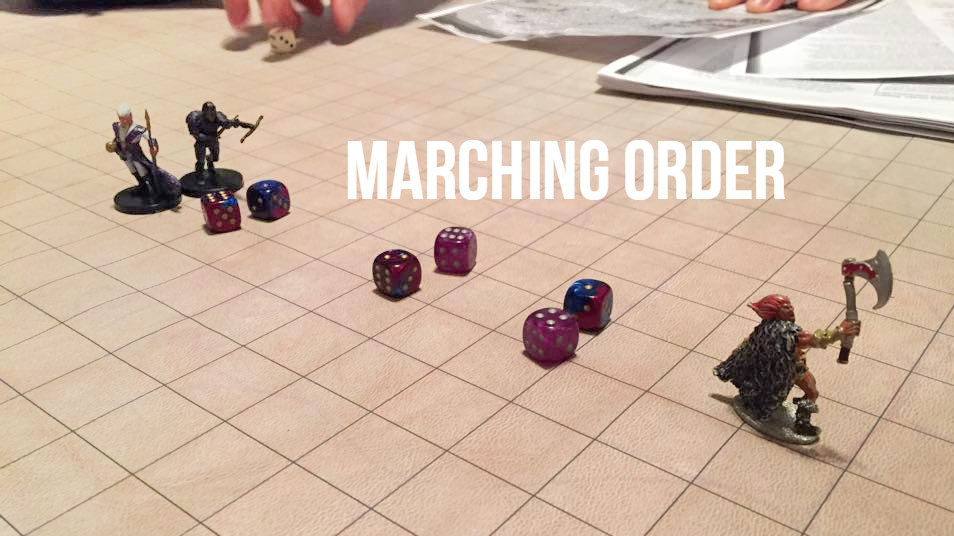
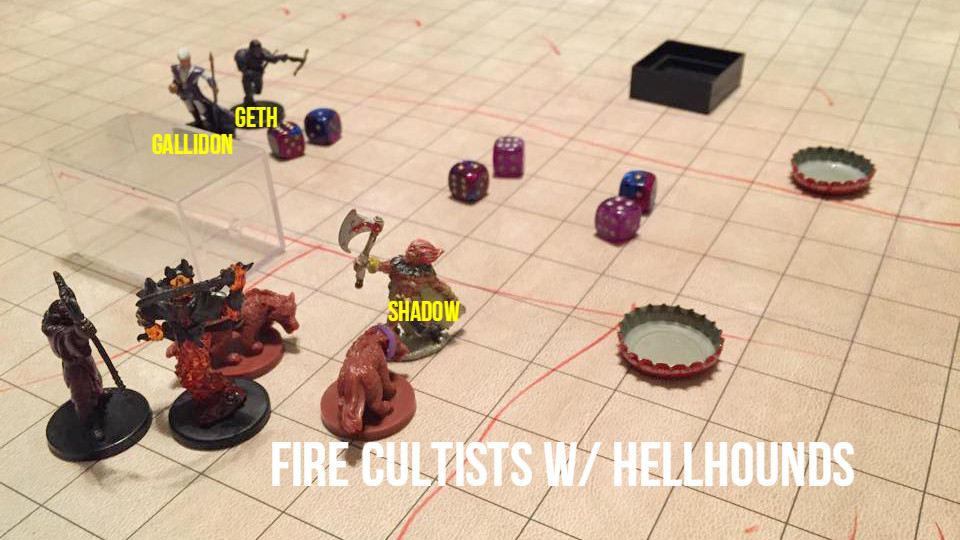
Druid-barding — the Mearls-Meld — hirelings Jimmy & Timmy, Pip & Pop, Genevieve & Alistair — discussion of side treks — fight 40 orcs y/n — we change the hexmap scale — our next season — fire cultists — Forgotten Realms names need work — tracking orc captives — surprise — orcish syllabic naming conventions.

“Hand-holding twin albinos.”

“They polish continually.”

We changed the hexmap scale from 10 miles to 1 mile. The whole module makes way more sense that way. Highly recommended.

 Next season of the podcast, Jim might DM Out of the Abyss, the new new WotC module.

From now on, when I roll random encounter checks, I’m going to roll to see what table I roll the encounters from: the low level table or the high level table.

Here’s how I’m going to do it:

  • roll a d20
  • if the roll is OVER the level of the highest level PC in the party, use the Early Travels (low level) table
  • else, use the Later Travels (high level) table
This means you have a linearly increasing chance of having high level encounters as the party increases in level.
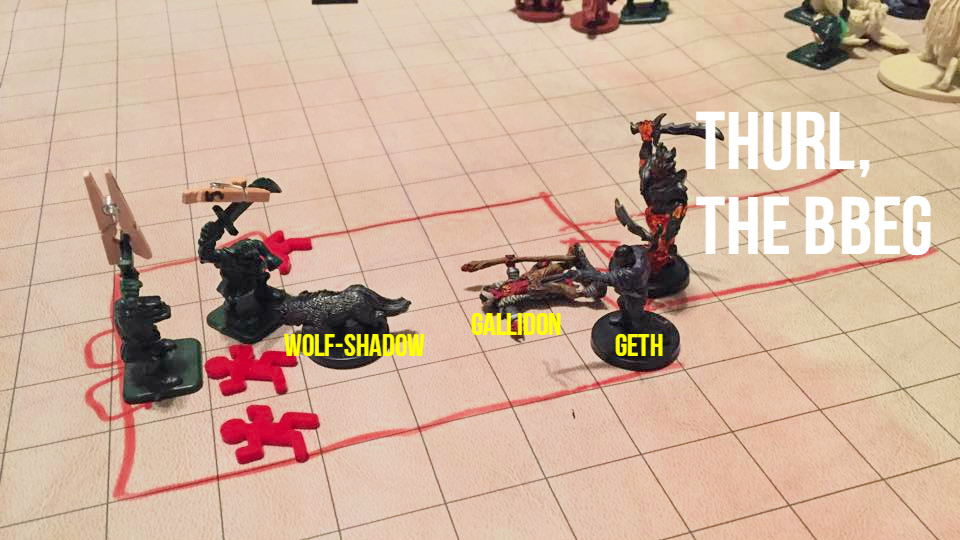
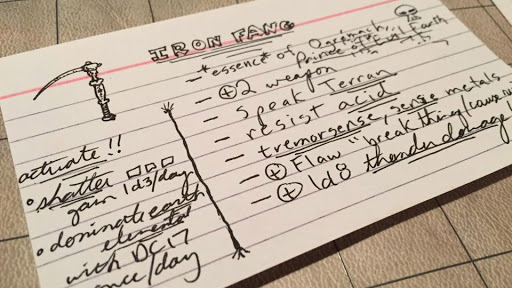
Shadow fails save vs Ironfang‘s flaw

mop-up

it’s over before the first round is

Episode 13: It’s a Trap

False welcome — long, intense battle — achievement unlocked.
This was some fight.

The party walked into a trap. I thought it was an obvious setup, but apparently people can’t read minds?

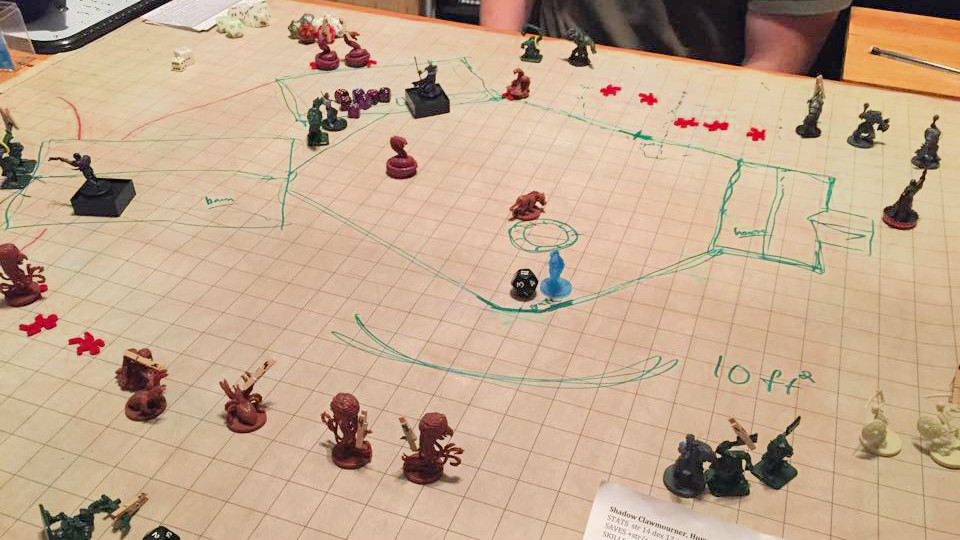
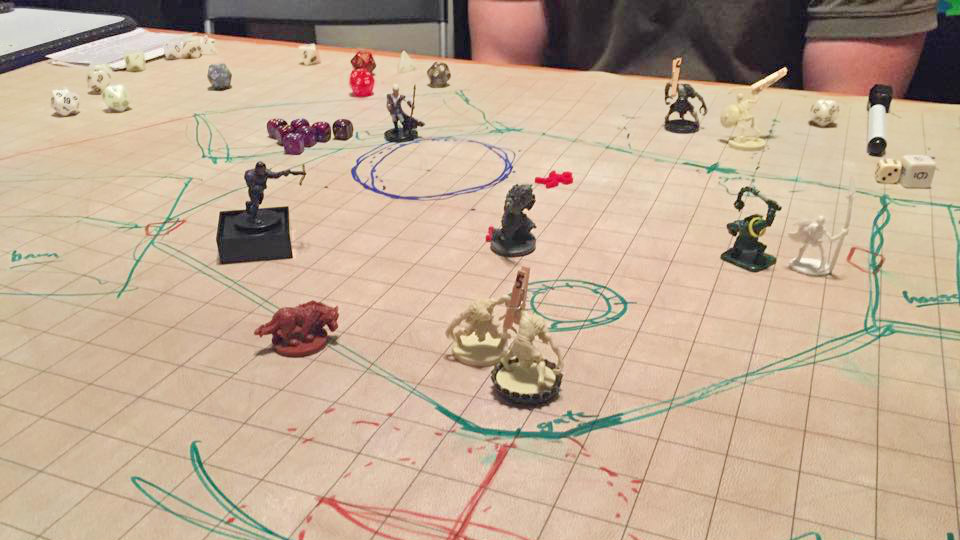
In any case, the baddies came in waves and surrounded the party.

All the mobs in the whole place came in to fight.

But my players have excellent tactics. This ain’t their first rodeo.

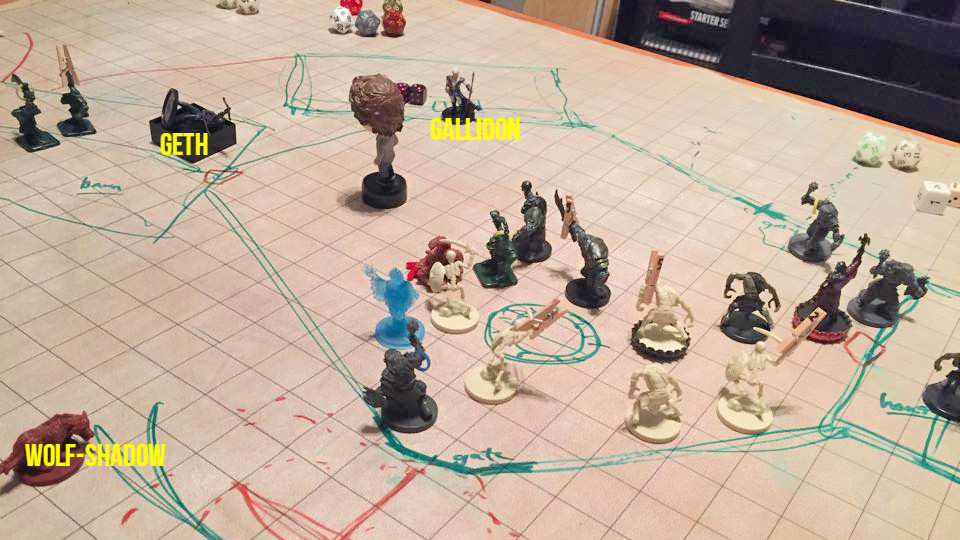
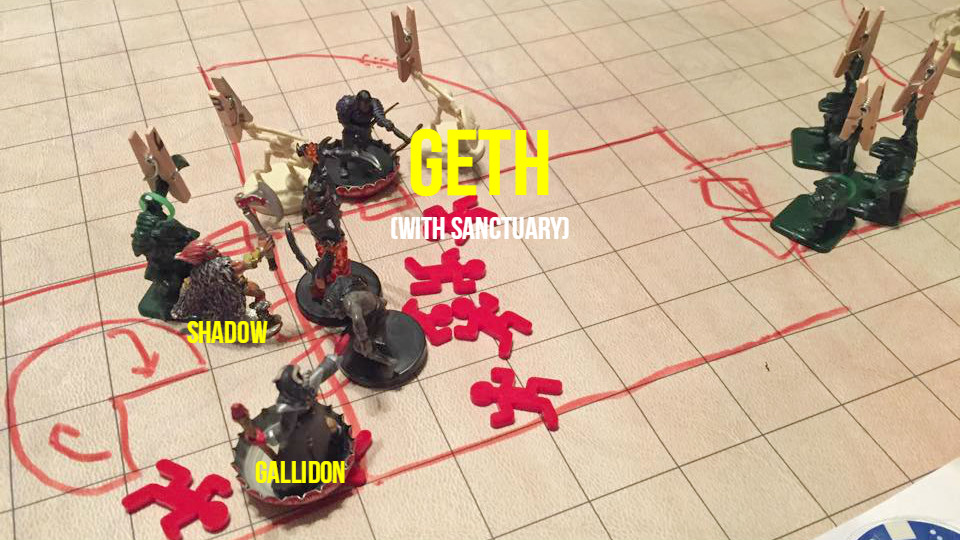
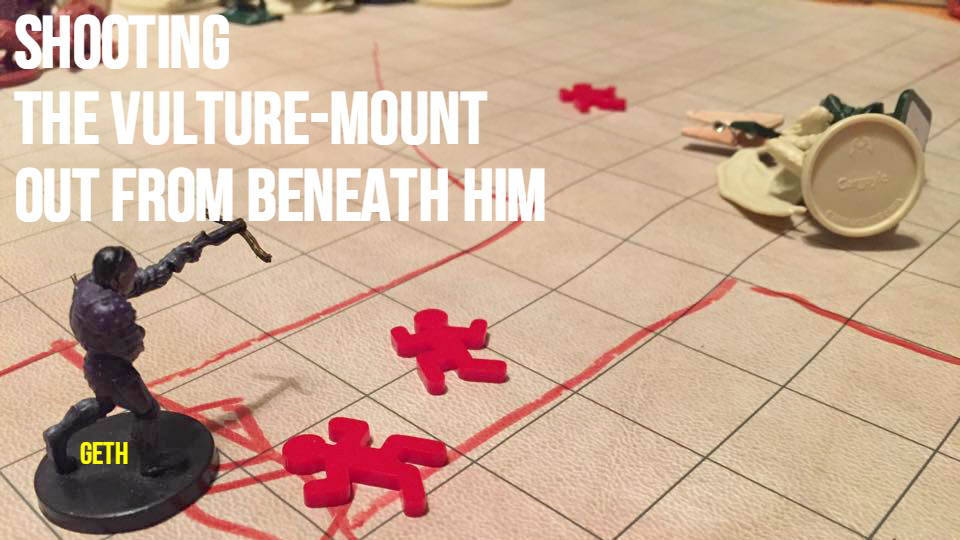
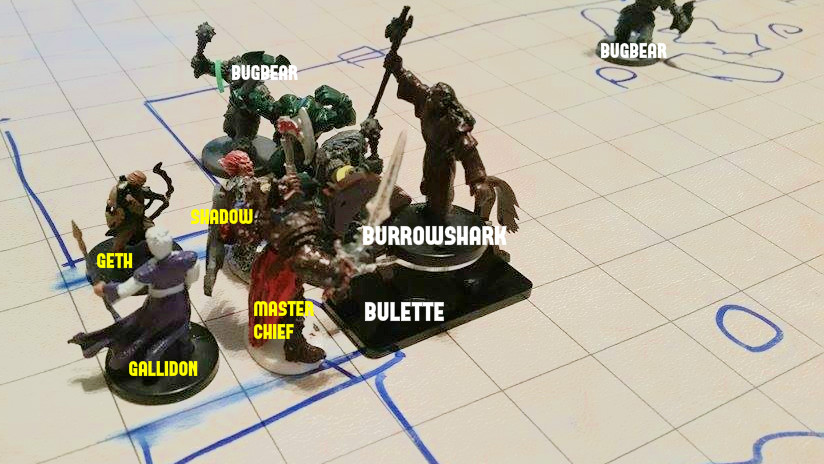
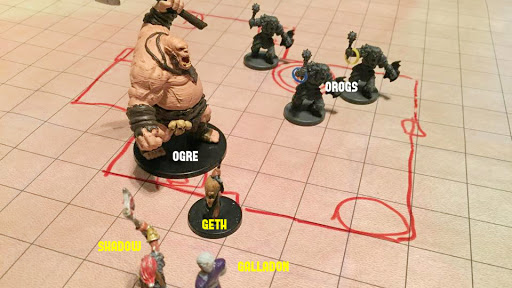
As you see below, they placed Geth in a side doorway, and Gallidon cast sanctuary on him, which means mobs have to make a Wis save to even attack Geth. On top of that, Geth dodged for his actions, which means mobs have disadvantage to attack him.

I don’t think he got hit after that.

Meanwhile, Shadow and Gallidon just wore the mobs down.

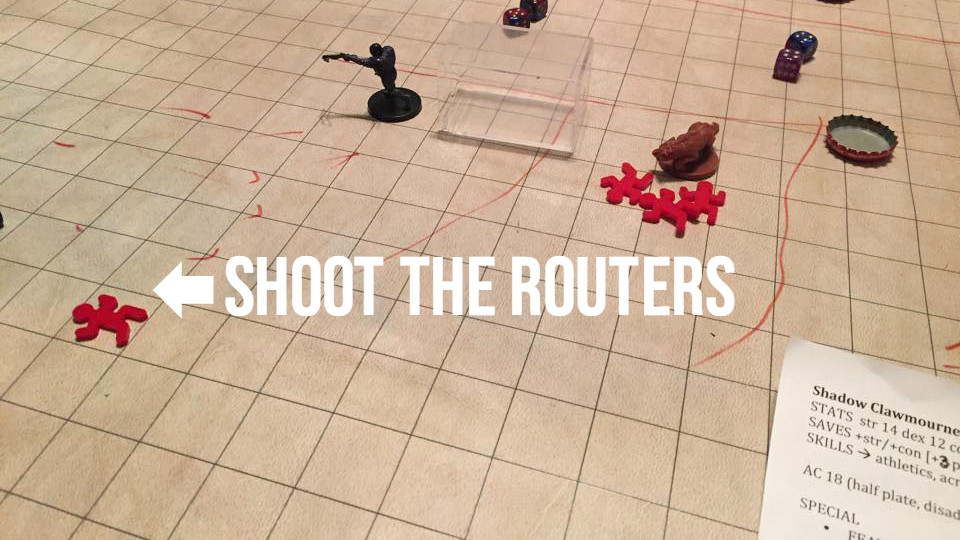
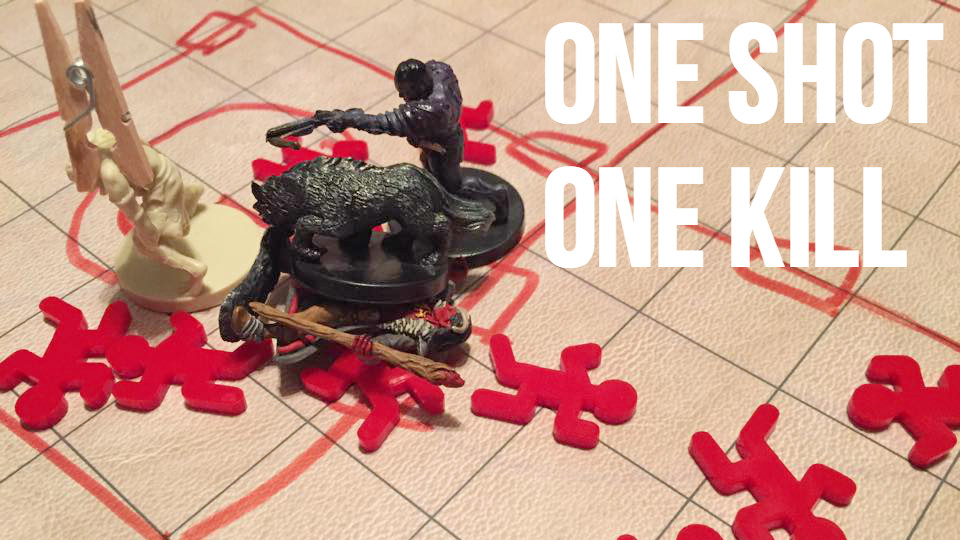
Until they routed. But, as one of the knights tried to escape, Geth shot out his vulture-mount from beneath him:

This episode is mostly fighting, but it’s a really good fight.

Episode 12: Harburk the Impaler

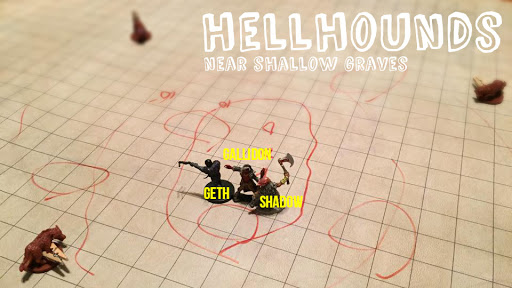
Picking off gargoyles — hellhounds — shepherds abiding in the hills — Harburk the Impaler — videogame excursus.

The bit when the party returns to Red Larch and finds that Harburk (“Hauberk” in our game) has taken over with Jalessa as mayor—that’s not really in the book. Not with as many umlauts anyway.

Here’s what the book says (emphases and bracketed comments mine):

. . . the folk of Red Larch are scandalized to learn that many of their most respected fellow citizens were part of a secret cabal. This discovery launches a whirlwind of gossip, innuendo, and recrimination. The other citizens of Red Larch shun the Believers for the next several months [months??? how long do they expect this game to go?], and the Believers turn against one another. Many retreat into seclusion. Leadership of Red Larch passes to Harburk, but he’s too busy as constable. After a month [?], Jalessa Ornra becomes Red Larch’s mayor. She’s liked and known for common sense, so the townsfolk rally around her.

But that’s obviously not what I did.

One, because you literally can’t present that. People recover quickly in this game. A night’s rest, and you’re back in business. No way this campaign is going to last in-game months.

Two, that’s boring, maybe?

So I decided to have Harburk take a very extreme line on this cult security business.

BECAUSE I WANTED TO SEE WHAT THE PLAYERS WOULD DO

I find that the quality of games improves if you try to cultivate a genuine sense of curiosity about the world and the player characters, but specifically the player characters. Think, “I wonder what would happen if they X,” and then show them X and find out.

Episode 11: Breach & Clear

Below the monastery — a guest star arrives — a tremendous encounter — amicable interrogation — information is the sharpest blade of all. Guest starring Josh via Hangouts.
There’s some great stuff in this episode.

The fight at the end is perhaps dependent on GM judgment to reproduce—but, obviously, I think it’s the right call.

Specifically (***spoilers***), our new fighter (played by guest star Josh), rushed in to the boss’s chamber and grappled him. I ruled that because of that, players who started in range of the boss’s gaze attack didn’t have to make their save. Maybe, per a strict reading of the rules, there should have been some other step before that should have been mechanically possible, but I couldn’t be bothered to look up and parse the details of the grappling rules in the moment.

In any case, this episode shows the incredible value of negotiation with monsters. It’s becoming a thing: episode 10 featured the same thing. Sometimes not killing monsters, even when you can without any risk of serious resource depletion, is worth the effort.

NOTE: when you are running a cult prophet, be sure to look at the writeup of their signature weapon in the appendix. It has stuff it can do that’s not listed in the prophet’s statblock.

Pics:

Episode 9: Fighting Gargoyles for 45 Minutes

We fight gargoyles for 45 minutes. That’s all this episode is. However, it does showcase the lovely abuse potential of the heallock build.

I’m not the expert on the build; so I’ll just talk about what it does and, generally, how.

The Heallock

It’s a warlock / cleric multiclass build.

Tim is playing Gallidon, a half-elf, level 4 at the moment, evenly split between cleric and warlock. Not sure about domain or pact.

Here’s the point, though:

  • Your warlock spell slots refresh each short rest. 
  • You can use your short-rest-refreshing slots to cast any spell you know
  • Including cleric spells
  • Which means you’re a never-ending healing battery and never run out of heal spells
In the episode you can see this at work. There happens to be, at this point in the module, little threat of wandering monsters, which means short rests are readily available. 
After the first fight with the gargoyles, the party retreats and rests and can heal up without expending any HD. After the second fight, the same. 
A bit situational, but pretty powerful, and that’s just one feature of the build. There may be others, but I don’t delve too deeply into that part of the game.