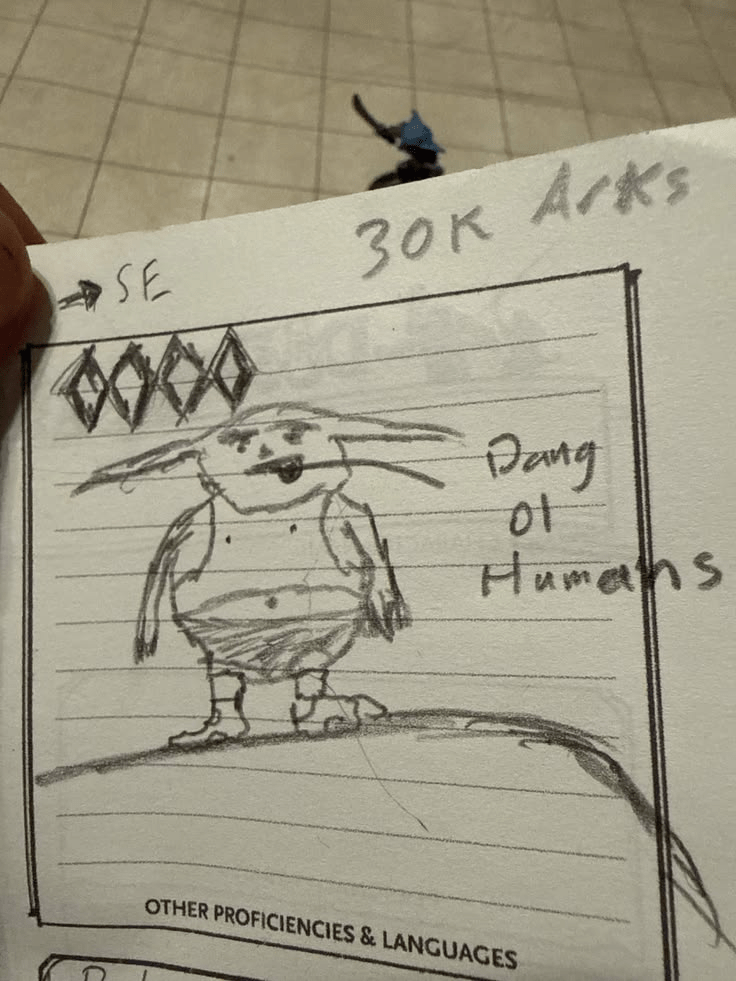
Pulling up to the mess hallBusting down the boss room doorBossfightAsa’s illustration of the goblinsBedwyr (Stefano)Craig (Tim), with new goblin king swagGareth the Great (Jim)Arthwr (John)
The fellas continue their delve into the goblin lair in my Hornless campaign. With only 4 players this time, they make the most of their numbers, focusing on scouting the dungeon and expanding the map—until they encounter an NPC. This sends the session sideways and lays the groundwork for the next episode. I also find my current pathcrawl travel procedure unsatisfactory—look for a separate post on that later.
Our tabletop RPG advice column, Dear Gary, returns with these questions:
Dear Listener writes: Dear Gary, I run games (often one shots) that are made accessible to a rather wide pool of players, and sometimes get an unexpectedly large group. How do I keep everyone consistently engaged in the session and off their phones at higher player counts?
Brian writes: Dear Gary, could you discuss the main house rules you use for your 5e/D&D games? Have you been inspired to add any rules from other game systems to your D&D games?
Brian writes: Dear Gary, what are your thoughts on game systems that use species (or race) as class, such as basic/expert D&D (from 80s), Dungeon Crawl Classics, or others?
Brian writes: Dear Gary, what is a game you have been eager to play but not gotten to the table?
We kick off a homebrew D&D campaign with a collaborative village and PC creation procedure from Beyond the Wall. You’ll see how it creates interconnected PCs who have a reason to be adventuring together right from the start and an interesting starting town that has more color than you’d get from improvisation or a random generator. Then we jump into our new default D&D homebrew campaign, Hornless.
Image Dump
Created using the rules from Beyond the Wall
Gules, 3 acorn Argent in annulo, 1 oak leaf Argent inverted in abyss (created from blazon with https://drawshield.net/)
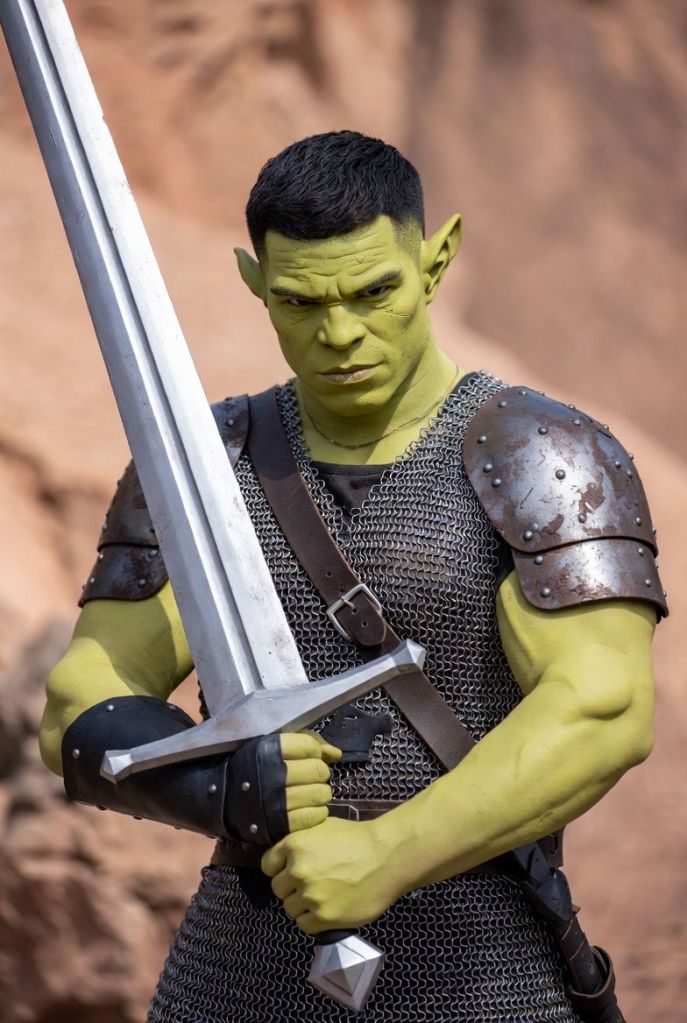
(AI images done with Grok Imagine.)
splash for the new campaignGregor (Asa)Craig (Tim)Slorgish (Lonnie)Gareth (Jim)Bedwyn (Stefano)Arthwr (John)Initial setup vs 5 wargsIt gets a little gnarly . . .
IRL, when I need a Favor from Someone, I mentally assign a Difficulty Class to that Request and then look within my Soul to see what Skills I have that would help me get what I want—and it’s no different in The One Ring 2e. We go through the Council and Fellowship Phase rules, which are the last systems in TOR 2e we have yet to cover. And then we give a quick review of all the systems.
TL;DR: it’s okay but is mainly a rehashing of stuff you can find in earlier mainstream and indie games.
We play through the climax of the starter adventure in The One Ring 2e’s full rules. We get into some of the finer points of the combat encounters and learn more about how some of the stats like hope and shadow work.
We play the first half of the starter adventure in The One Ring 2e’s full rules. This is mostly us getting a handle on the mechanics that were touched only lightly in the starter set, such as journeys and combats from start to finish.






You must be logged in to post a comment.